The Opt-Out Wins Again

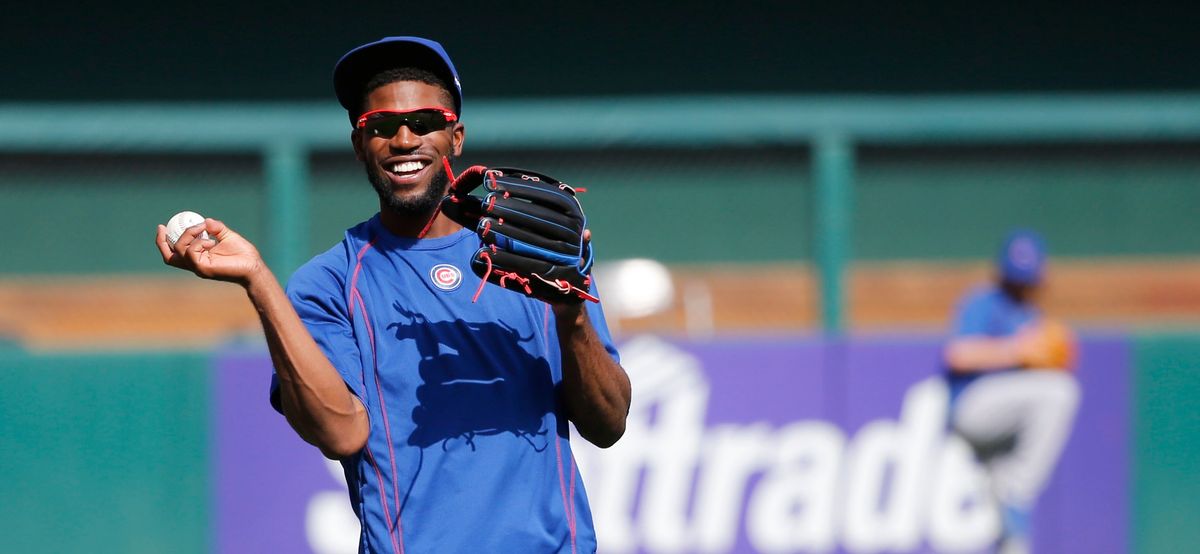
About this time yesterday, it looked like free-agent outfielder Dexter Fowler was going to be a Baltimore Oriole:
But then Fowler showed up at the Cubs’ spring training facility, and the team announced that he had signed a two-year $17 million deal that will keep him in Chicago. If you’re wondering why Fowler walked away from more years and more money, it’s because this is the offseason of the opt-out.
Fowler’s contract with the Cubs comes with a mutual option after year one, meaning that Fowler can opt out of the deal after next season and hit the free-agent market once again. Securing a one-year opt-out clause was apparently a sticking point for Fowler, and one that prevented the Orioles from snagging him:
It seems like everyone is getting opt-outs baked into their contracts these days, and Fowler isn’t the only one to value flexibility more than years or dollars. The Cubs previously landed Jason Heyward with an eight-year, $184 million deal featuring opt-outs after years three and four, despite the fact that Heyward could have gotten more guaranteed money with the Cardinals or Nationals. Then there was Yoenis Cespedes, who walked from a big offer from the Nats in favor of a three-year, $75 million contract from the Mets that came with an opt-out after year one. David Price, Justin Upton, and Johnny Cueto are also among those who signed deals with options this winter.
Opt-outs aren’t new to baseball; they’re just player options. But they’re more frequent than ever before in a sport where “player-friendly contracts” historically entailed length. Opt-outs are obviously a huge boon for guys like Heyward, a young player who, barring a disastrous injury or major regression, will have the ability to secure an even bigger payday in the near future. But Fowler driving hard for an opt-out could be a signal that they will soon become standard, rather than just a perk that teams will hand out in order to woo star players.
If you want to put on your tinfoil hat, it’s possible to see the rise of the opt-out as agents reacting to their displeasure with MLB’s current revenue split. There’s more money than ever before in baseball, but the players are seeing less and less of it. The current CBA expires after this season, and the players union doesn’t have many cards to play that could guarantee a more equal spreading of the wealth. A salary floor would do the trick, but that would almost certainly bring a salary cap, which would be a disaster for the players. All the union can really do is ask very nicely that the owners spend some more of their TV-contract fortunes on payroll.
What players and agents can do, though, is keep demanding opt-outs. Commissioner Rob Manfred has already come out strongly against them, and owners certainly don’t want a league in which every half-decent player can opt out after one year to demand a fat raise. At the very least, opt-outs are a good way for players to stick a finger in Manfred’s eye and mitigate some of the current revenue inequities.
Related






- Brewers vs. Dodgers Game 3 Predictions, Picks and Odds
- Dana White's Contender Series Week 10 Predictions and Picks
- Guardians vs. Rays Game 2 Prediction: Picks, Odds and Best Bets
- Bills vs. Rams Odds, Prediction and Best Bet for MNF
- Three Longshot NFL Futures Worth Betting in Week 5
- Falcons vs. Ravens Odds, Prediction and Best Bet for Sunday Night Football
- White Sox vs. Guardians ALDS Game 5 Betting Pick