The Wonderlic Test Proves The NFL Is Stupid

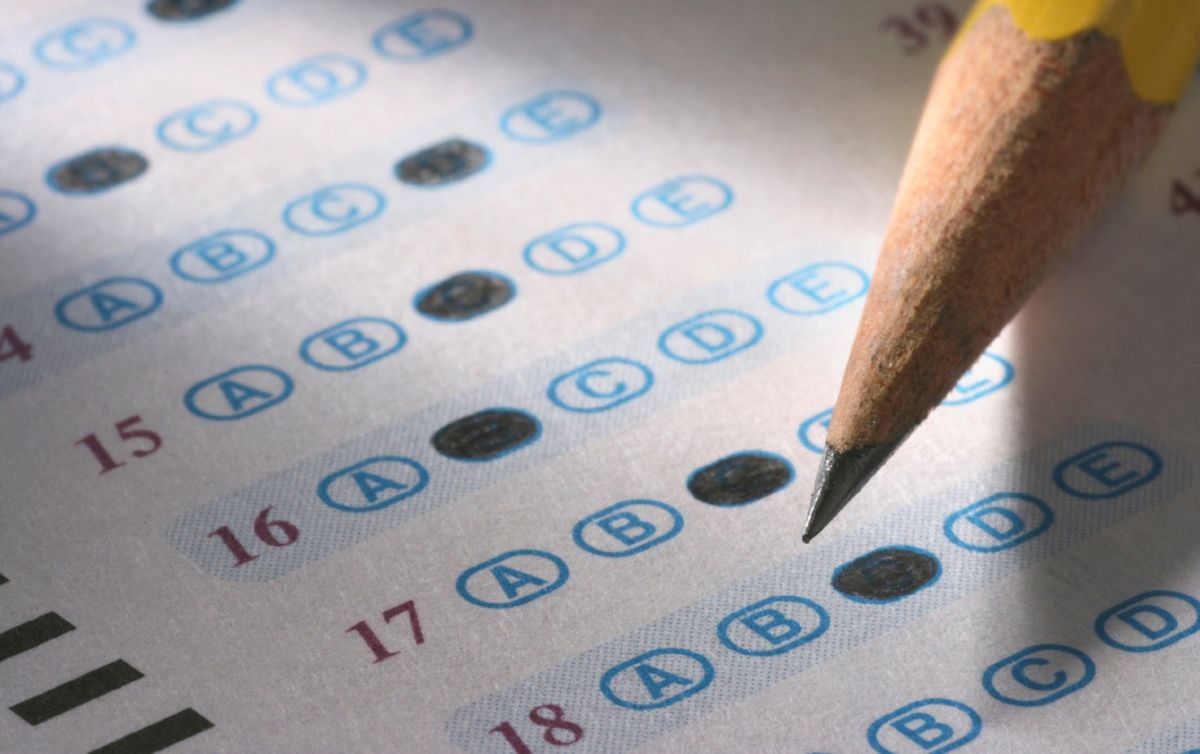
Here is an indisputable fact, one of the very few that exist surrounding the mysterious and dreaded Wonderlic Test: the Wonderlic is not meant for football. Over 75 years, only a few thousand of the more than a hundred million test takers have been NFL hopefuls. It is a test of problem solving and cognitive abilities, and has shown a direct correlation with future job performance overall. But football is a different sort of job, one reliant on physical skills, and mental processes that may not involve knowing the age of a boy if his sister is twice his age minus eight.
Does anyone care about the results of the test? Teams don't seem to—plenty of players on the far left of the bell curve have been drafted early. Players sure as hell don't. Leaked Wonderlic scores are only good for troll battles between moralizing writers that will make you dumber for having read them.
Here's another fact: there has never been a study that shows a good Wonderlic score will translate to any sort of advantage on the football field. (This should not be a surprise. Great football players often struggle with the single most widely used intelligence test, then excel. It's called the SAT.) Here's one last fact: there have been several studies that indicate the Wonderlic may be useless, or worse.
One, in 2005, found zero correlation between Wonderlic score and passer rating. Another did find a very specific correlation, but it's not one Wonderlic proponents would like to advertise.
Dr. Brian Hoffman co-authored a 2009 study with Brian D. Lyons in collaboration with California State University (Fresno) and Towson University. The Lyons Study was presented at the 20th and 21st annual Meetings of the Society for Industrial and Organizational Psychology. This 43-page study of 762 NFL players over three draft classes comes to two distinct conclusions:
1) NFL performance on the football field was only found to have a statistically significant correlation with Wonderlic scores among two positions: Tight end and defensive back. Correlations were statistically negligible across all other positions. (Yes, even QB.) In other words, with the exception of TEs and DBs, a player's Wonderlic score (high or low) gave no predictable projection for their eventual productivity as an NFL player. It was worthless.
2)Tight ends and defensive backs showed a (significant) negative correlation.
A "negative correlation" means exactly what it sounds like. The study found that for tight ends and defensive backs, prospects with lower Wonderlic scores actually The study's authors theorize that those positions are driven by instinct, and a tendency to overthink plays means missing a step. Alternately, the TE and DB findings could be chance outliers, and the entire concept of Wonderlic-as-predictor is horseshit.
The study has its failings. Critics say it cannot be properly peer-reviewed because the data—the actual Wonderlic scores—is not publicly available, instead gathered from the hundreds of scores that have been reported in the media. Mike Callans, VP of research and development at Wonderlic, Inc, dismisses the findings. "There are no studies to disprove it," he says, "because the data you need to disprove it is not available." Or to prove it, we will add. The scores will never become available, except to NFL teams who presumably have done their homework on any correlation between Wonderlic and performance. If they have, none of them have ever shown an inclination to heavily weight their draft board by it.
"You have to watch out for the smart ones," Giants GM Jerry Reese said in 2007. "If things aren't going well, they have other careers to fall back on. The ones who are good at football and only football, they'll do whatever it takes to stay in the league."
We're told 40-yard-dash times. Photos of shirtless and out-of-shape athletes at the combine proliferate. It's fair to argue that these should be public, as they have a real impact on the perception of the player's draftability and future performance. But don't treat the Wonderlic like it's some secret alchemy, because the special treatment gives it a mystique it probably doesn't deserve. Either make all scores public, opening the entire testing concept to scrutiny and scientific review, or do away with it altogether. Start bringing in phrenologists. For all we know (and for all Wonderlic Inc. will let us know), that would be just as predictive.
Ole Miss' CFP Hopes Take a Hit After Loss to Texas
Why Tyrese Maxey Is the Key to the Sixers’ Success
Seahawks vs. Chiefs Betting Pick: SNF Best Bets
Why Did Netflix Mike Tyson Docuseries Omit His Last Fight?
- Rays vs. Brewers Prediction: Why Tampa Bay Can Steal Game 2 on the Road
- UFC 333 Betting Lines Are Tightening Across a Wide-Open Fight Card
- UFC 333 Betting Splits: Where the Sharp Money Is Landing This Weekend
- NBA Best Bets Today: Pacers, Grizzlies and Trail Blazers Picks
- College Football Week 8 Best Betting Picks, Predictions
- World Series Game 1 Predictions: Rays vs. Brewers Picks and Best Bets
- UFC 333 Predictions: Best Bets for Volkov, Keita and Murzakanov