Theo Epstein Wonders Why The Cardinals Are Getting Extra Draft Picks

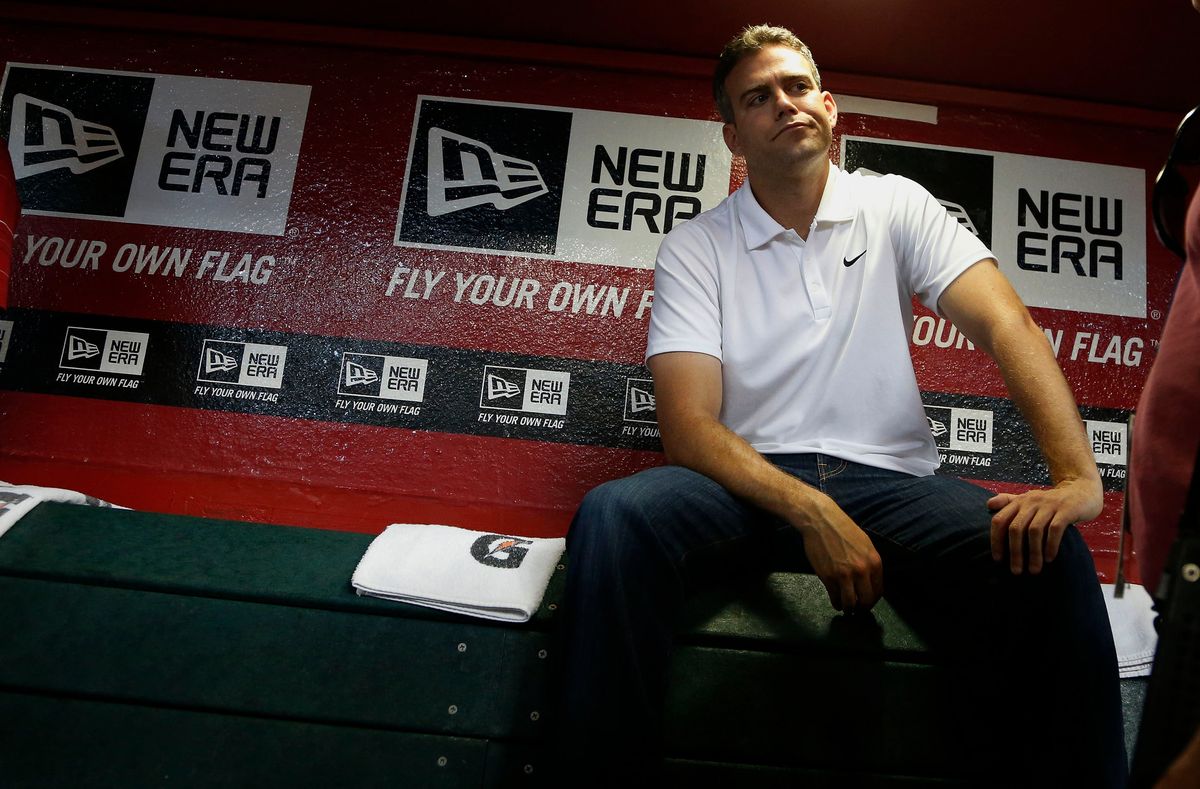
Beginning in 2012, MLB's collective bargaining agreement created the Competitive Balance Lottery, meant to give the scrappy underdogs of baseball a hand up with an extra draft pick to help them turn their franchises' fortunes around. The lottery drawing was yesterday. The third pick belongs to the Cardinals, the reigning NL pennant winners.
The Competitive Balance Lottery takes the 10 teams in the smallest markets, the 10 teams with the smallest revenues (there is overlap; this year there were 15 teams total that were eligible), weights their chances by winning percentage, and draws 12 teams—six to pick after the first round of the draft, six to pick after the second. The Cardinals qualified by dint of having one of baseball's smaller markets. The full results of yesterday's draw can be seen here; Miami won, followed by Colorado, and then St. Louis.
Cubs GM Theo Epstein, in the politest possible terms, thinks that's bullshit.
"I could talk all day about the Cardinals and how much we hold them in high regard," Epstein said. "That's a fantastic franchise. They have been for the better part of a century. They do extremely well from a baseball standpoint, and from a revenue standpoint. That's probably the last organization in baseball that needs that kind of annual gift."
Epstein's frustration is obvious. His team is last place in the NL central, has the second-lowest payroll, yet the only teams in the division not to receive a Competitive Balance pick are the Cubs and the truly small-market Pirates.
The problem is in the name. This isn't about "competitive balance" at all. The biggest conflict in building the 2011 CBA, as in most labor negotiations, wasn't between owner and player: it was been the rich owners and the ultra-rich owners. A team in Milwaukee is never going to bring in as much revenue as one in New York, so the CBA negotiations are really between the haves and the have-nots over how to divide up the pie. MLB has has some form of revenue sharing for 18 years. Think of the Competitive Balance Lottery as asset sharing, tossing the small-market clubs a bone in the form of an extra high-quality prospect.
The Cardinals winning that extra draft pick is a byproduct of using market size to define means, and maybe it's not an unfortunate one. Why should MLB punish teams that have managed to win consistently in spite of their markets? Why shouldn't MLB reward them, and incentivize success? It's not the Cardinals' fault they've managed to do what they've done in the country's 19th largest metro area. It is the Cubs' fault they can't build a winner in the country's third-biggest. (Take a look at where each falls on this FiveThirtyEight chart of performance relative to payroll.)
No, this is just more fodder for what promises to be combustable CBA negotiations when the current deal expires after the 2016 season. When the big-market teams feel they're getting shafted, that's when labor talks get ugly.
Related


Ole Miss' CFP Hopes Take a Hit After Loss to Texas


Why Tyrese Maxey Is the Key to the Sixers’ Success

Seahawks vs. Chiefs Betting Pick: SNF Best Bets


Why Did Netflix Mike Tyson Docuseries Omit His Last Fight?

- Rays vs. Brewers Prediction: Why Tampa Bay Can Steal Game 2 on the Road
- UFC 333 Betting Lines Are Tightening Across a Wide-Open Fight Card
- UFC 333 Betting Splits: Where the Sharp Money Is Landing This Weekend
- NBA Best Bets Today: Pacers, Grizzlies and Trail Blazers Picks
- College Football Week 8 Best Betting Picks, Predictions
- World Series Game 1 Predictions: Rays vs. Brewers Picks and Best Bets
- UFC 333 Predictions: Best Bets for Volkov, Keita and Murzakanov