Heat Map: Did The Final Four Pay Off For Atlanta?

Do stadiums really generate revenue for cities? It's a complicated question, but the short answer is: 1) Yeah, some, but 2) Not nearly enough to offset the enormous public costs of these developments.
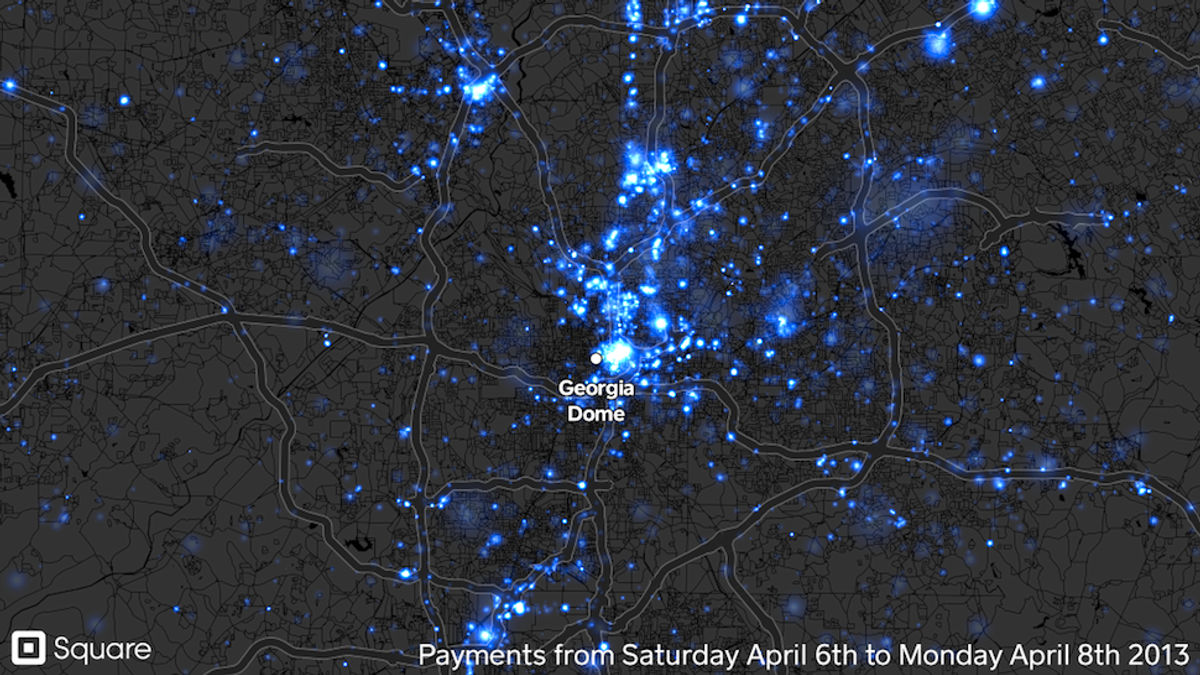
The most commonly cited revenue stream from stadiums is the retail sales–and resulting sales taxes–that they bring in, particularly from major events. This sales data can be frustrating to track down, but Square, the company that makes the card readers you've probably seen around, was awesome enough to generate a heat map of transactions made using their devices during the Final Four in Atlanta. To draw any real conclusions, you have to compare it to the previous week:
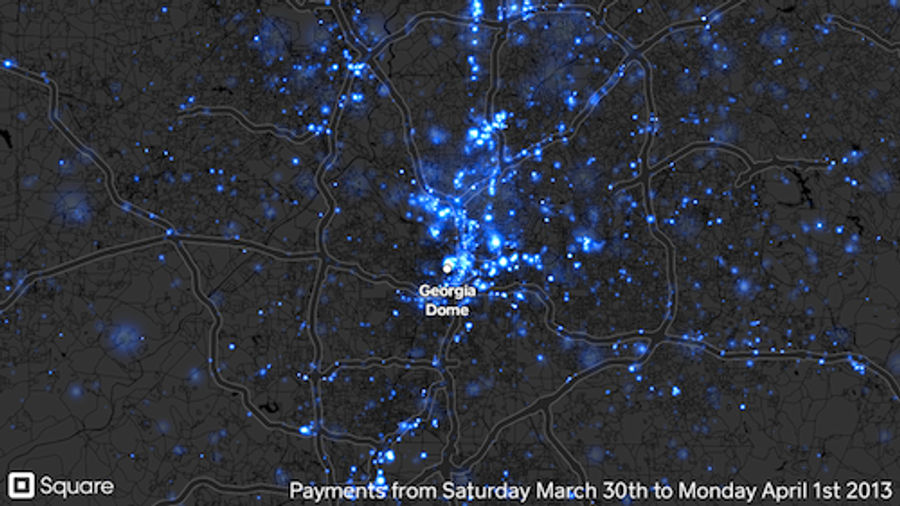
Square reports that this is a week-to-week 11 percent increase in total sales, from $1.6 million to $1.8 million. This is more than double the $800,000 in sales that Square reported for their similar Super Bowl map, which makes sense given that that bigger event took place in a much smaller metropolitan area.
An 11 percent jump is nothing to laugh at, but only a portion of that money will make it back to the city and state through sales taxes and, eventually, property/income taxes. The Georgia Dome cost $214 million in 1992. That's $345 million in 2012 dollars. It was 100 percent publicly funded.
I've annotated the map at the top with some of the spots that appear to have seen the biggest sales jump during the Final Four, help me out and add your own!
Update: Here's a much easier way to compare those two maps.

Marvin Harrison Jr. Trade Mystery Makes Very Little Sense


White Sox vs. Guardians ALDS Game 5 Betting Pick





- College Football Week 6 Bets: Three Picks for Saturday’s Biggest Games
- UFC Fight Night Underdog Pick: Why Kai Kamaka III Is Worth a Bet
- WNBA Playoff Picks: Best Bets for Liberty-Dream and Aces-Valkyries
- Friday College Football Best Bets: Iowa-Washington and BYU-Iowa State
- UFC Vegas 122 Betting Splits: Where the Sharp Money Is Landing This Weekend
- Guardians vs. White Sox Game 4 Bet Picks, Prop Bets
- Buccaneers vs. Cowboys Odds, Prediction and Best Bet for TNF