IOC Keeps Stuffing Its Head Up Its Ass With Doping Policy

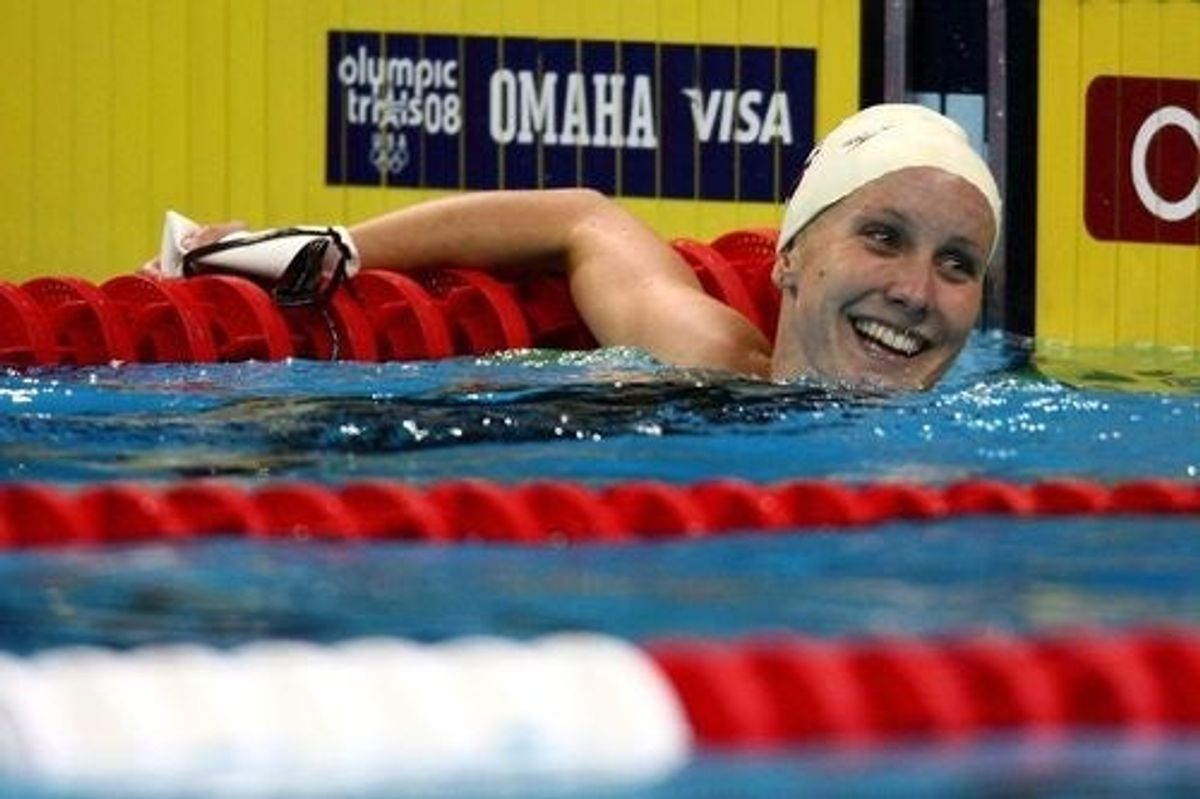
When athletes blame failed drug tests on protein supplements, I usually call bullshit. But in this story, U.S. swimmer Jessica Hardy missed the '08 Olympics because of a nutritional supplement, and now, she may also miss the London Games. This is bullshit!
Hardy, a 23-year-old from Long Beach, Calif., is the current world-record holder in the 100-meter breaststroke. She could qualify for four events in the 2012 U.S. Olympic Trials. But the International Olympic Committee (IOC) is sticking to a rule that, although certainly rooted in honorable intentions, might require a little flexibility in this special case and others like it.
Juliet Macur wrote a detailed article about Hardy's situation in today's New York Times. The new IOC rule — it was passed and put into effect just before the Beijing Games — mandates that any athlete who has served a "doping suspension of six months or longer" cannot compete in the next Olympics. No matter what. Hardy already served a year-long suspension for her failed drug test, which detected the drug clenbuterol, later found in her store-bought nutritional supplement. This is like getting grounded after a time-out for something your sibling did.
It's senseless, and sadly enough, bad communication between the IOC and the U.S. Olympic Committee may be to blame. The current ruling for Hardy and U.S. runner LaShawn Merritt, who faces a similar dead-end, is unclear because the IOC refuses to consider athletes' appeals until they have made their countries' national teams. Hardy would be a shoo-in, but because she is technically ineligible for the next Olympics by IOC standards, she may not be allowed to participate in the trials. Or, she could compete in trials, win a team spot, and then the IOC could deny her appeal anyway. It almost makes you nostalgic for the days when the fascists ran the joint. Macur explains the roadblock:
The arbitrators in Merritt's case wrote that the U.S.O.C. and its member organizations could not use the I.O.C. rule to bar an athlete from competing in the Olympic trials. But Scott Blackmun, chief executive of the U.S.O.C., said his organization was waiting for the national sports federations to draft their eligibility rules for the trials. The U.S.O.C. approves those rules, basically giving it the final say on whether athletes affected by the I.O.C. ban can compete.
Both Hardy and Merritt, Macur says, have no choice but to tiptoe their way through the bureaucratic maze the IOC has put in place and prove to a committee that either "their doping offenses were minor; that they had no fault or no significant fault of negligence; or that significant mitigating circumstances were involved." All this for over-the-counter nutrition supplements and male enhancers. I don't think there's a lesson to be had here — except maybe to carefully read the ingredients on your penis pills before you compete in the Olympics.
Olympic Hopefuls Say Doping Rule Amounts to Double Jeopardy [New York Times]
The Biggest Disappointments of the MLB Playoffs So Far

Three Non-Power College Football Playoff Contenders
Why Doesn’t the NFL Have Full-Time Referees?

Milwaukee Brewers vs. San Diego Padres Game 4 Betting Picks

MLB Playoff Picks for Wednesday: HR Props, ML Picks and More

5 Fights the UFC Should Make After UFC 332
Bijan Robinson Keeps Proving He’s Built for Primetime

TV Networks Have Killed College Football

- Milwaukee Brewers vs. San Diego Padres Game 3 Bet Picks and Predictions
- Dana White’s Contender Series Week 9 Predictions: Picks for Every Fight
- Two MLB Playoff Bets Stand Out on Monday
- Yankees vs. Rays Prediction: Best Bets for ALDS Game 2
- Falcons vs. Saints Prediction: Best Bet for Monday Night Football
- MLB Playoff Picks: Padres vs. Brewers and Braves vs. Dodgers
- Lions vs. Panthers Prediction: Best Bet for Sunday Night Football