United States Must Capitalize on Its 2026 World Cup Advantage

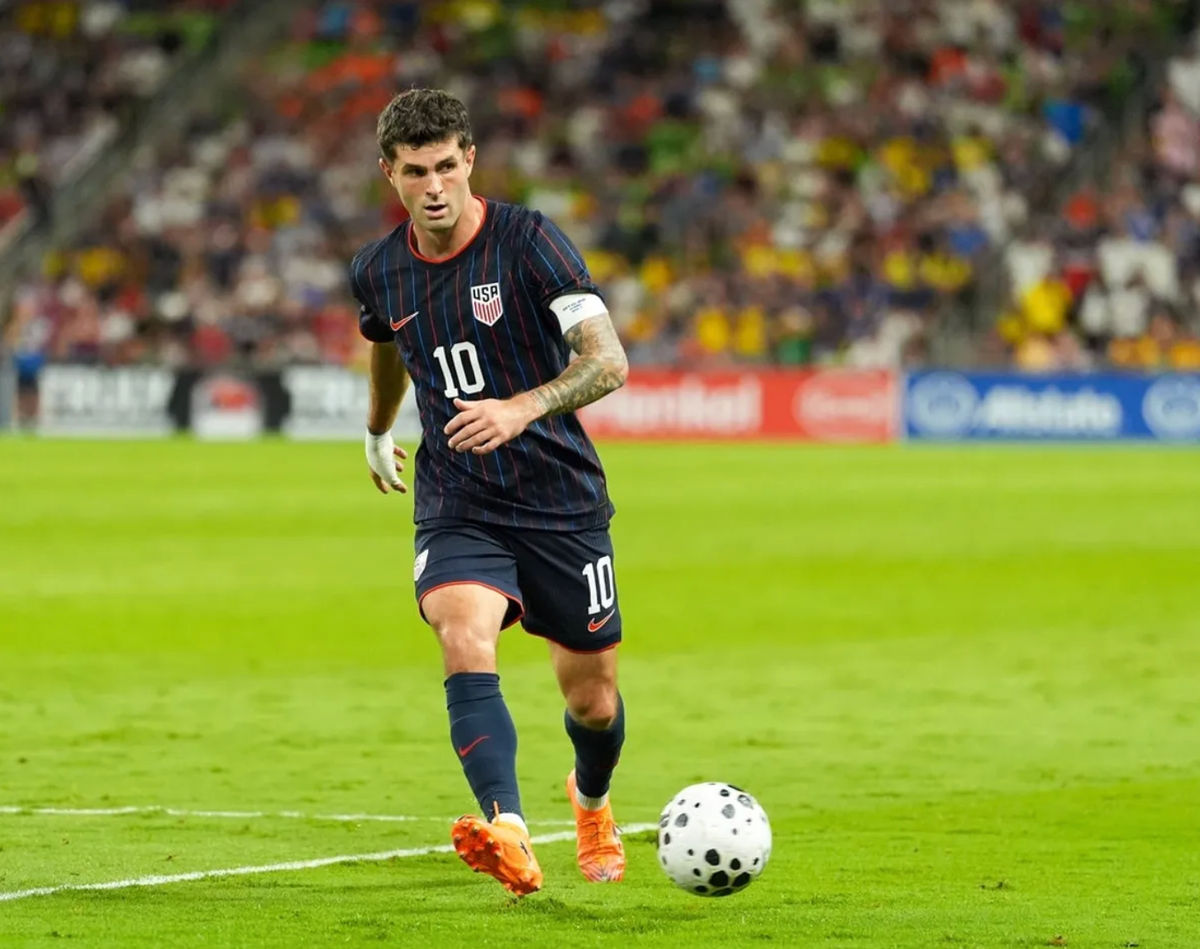 Oct 10, 2025; Austin, Texas, USA; United States forward Christian Pulisic (10) passes the ball at Q2 Stadium. Mandatory Credit: Scott Coleman-Imagn Images
 With the United States men’s national team winning its World Cup group with a game to spare and facing a possibly favorable bracket in the knockout phase, some outside our borders are starting to whisper that this tournament is fixed for the Americans.
To which I say this: You’re goddamned right. Where the hell have you been?
The 2026 tournament structure is friendlier to the American team than any previous World Cup edition since 1994. It’s the same for Mexico and Canada. It should be no clearer now than it was looking at the World Cup Draw last December, or even the pots of teams seeded for the draw in the months before that. And it’s been the same for basically every other host World Cup nation over the past 50 years.
That's exactly why the Americans performing well in this particular World Cup is so damned important. We don't often get these advantages.
Since the 1970s, host nations have received a top seed for the World Cup draw, keeping them from being drawn into groups with other top-seeded teams.
That has only become more important as the tournament has expanded from 16 teams back then to 48 today.
Even when the U.S. hosted a 24-team event in 1994, it was still possible for a seeded team to get lumped into a group with one tournament dark horse (Colombia) and another eventual semifinalist (Romania).
But the combination of expanding the field and tweaking the seeding has virtually eliminated the possibility of a similarly rough fate in 2026.
In fact, while we’re all talking about the Americans making easy work of Paraguay and Australia now, the consensus coming in was that their group was one of the more difficult ones. By the FIFA World Rankings, it was the most difficult on average, with no global power but also no true minnow.
Host nations catching a break on tournament travel is also more or less the norm.
The 1994 United States team played its last three matches in California And if you think the 2026 USMNT getting to stay on the West Coast is unfair, that’s nothing compared to the edge Mexico will enjoy.
El Tri will play the round of 32 and potentially the round of 16 at altitude in Mexico City, where they’ve been acclimated for weeks. Their opponents may have to fly in from sea level base camps a day or two before.
The only thing new is that an American team is actually taking advantage of the benefits they're being provided. It feels weird for USMNT fans, but it's exactly the same as 2014 Brazil, 2006 Germany, 2002 South Korea and Japan, and 1998 France, who all finished atop their groups as hosts.
If the USMNT makes a captivating run to the semifinals, well, so did all but one of those teams.
This is still the World Cup. Eventually, Mauricio Pochettino's group will have to beat an elite team to get there, possibly in the round of 16 against the same Belgium side that shellacked them in a March friendly, or in the quarterfinals versus a Spain outfit that remains one of the oddsmakers' favorites to win the whole thing
Until then, call the tournament fixed if you want. It's exactly why playing well in 2026 is so important. Because who the hell knows when a chance this good will come around again?
Related
Three Longshot NFL Futures Worth Betting in Week 5

Georgia Football Could Return to No. 1 After Beating Alabama


Marvin Harrison Jr. Trade Mystery Makes Very Little Sense

White Sox vs. Guardians ALDS Game 5 Betting Pick


- UFC Vegas 122 Betting Odds: The Biggest Line Moves Before Allen vs. Duncan
- UFC Vegas 122 Picks and Predictions: Three Bets for Allen vs. Duncan
- College Football Week 6 Bets: Three Picks for Saturday’s Biggest Games
- UFC Fight Night Underdog Pick: Why Kai Kamaka III Is Worth a Bet
- WNBA Playoff Picks: Best Bets for Liberty-Dream and Aces-Valkyries
- Friday College Football Best Bets: Iowa-Washington and BYU-Iowa State
- UFC Vegas 122 Betting Splits: Where the Sharp Money Is Landing This Weekend